
Superiority in Future Warfare: From Firepower to Adaptive Capacity
One of the most significant implications of the war in Ukraine has been its challenge to long-standing assumptions about the nature of modern warfare. For decades, military power was assessed primarily through conventional indicators such as force size, tank inventories, combat aircraft capacity, and ammunition stockpiles.
While these factors remain important, they are increasingly insufficient on their own to explain outcomes on the battlefield. This is because the very nature of military power is changing.
Battlefield superiority is no longer determined solely by the capabilities a military possesses, but also by how rapidly it can adapt those capabilities to changing conditions. The wars of the future are therefore unlikely to be won simply by the largest armies. Rather, advantage will belong to the forces that learn fastest, translate lessons into doctrine, and adapt their military systems more quickly than their adversaries.
War is no longer simply a contest in which opposing forces confront one another. It has become a competitive environment that continuously learns, evolves, and reconfigures itself.
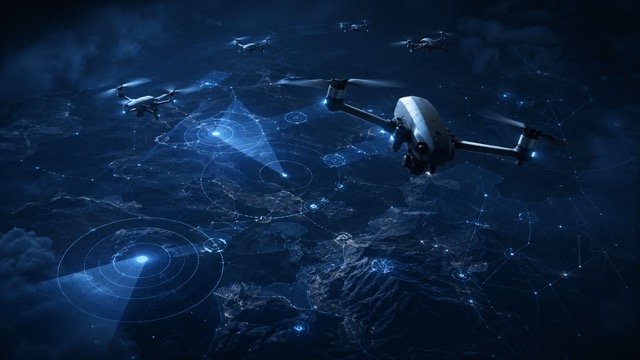
Electronic warfare systems, commercial satellite imagery, open-source intelligence, AI-enabled target detection, unmanned aerial and maritime systems, and digital command-and-control networks have all become components of the same operational architecture. What matters, therefore, is not the individual platform in isolation. What matters is the system that connects those platforms—and the speed at which that system can learn.
This is also why the speed of software updates on the battlefield has become as important as the rate of ammunition production. An adversary may introduce a new electronic warfare technique, shift frequencies, or deploy a different interception or countermeasure system. In response, you must be able to modify your sensors, algorithms, communications methods, and tactics accordingly. Moreover, this cycle is no longer measured in years. Weeks—and at times even days—can prove decisive.
Under the traditional defense-industrial model, a requirement would first be identified, followed by a lengthy development process, with the resulting system eventually delivered to the armed forces. The war in Ukraine, however, has demonstrated a far more agile model.
Amid the destruction and immense human suffering, the front line has also become a research and development laboratory. Soldiers, engineers, entrepreneurs, private-sector firms, and public institutions have been drawn into the same feedback loop. Operational needs flow from the battlefield to developers; solutions are produced, deployed, and tested again under combat conditions. This model does more than accelerate innovation. It also reduces the risk of investing in the wrong technology, at the wrong time, and at the wrong scale.
One of the clearest manifestations of this dynamic is the growing use of platforms costing only a few thousand dollars to force adversaries to expend interception systems worth millions. The resulting cost asymmetry is altering one of the fundamental equations of defense economics.
Data generated by one sensor can cue another platform; a software update can reshape battlefield tactics; and a commercial technology can be converted into a military capability within a remarkably short period of time.
Although countries differ in their capacity to adapt, it would be unrealistic to assume that the military adaptations emerging from these lessons will remain confined to a handful of states. The same experiences are being closely observed and analyzed by potential adversaries, who are incorporating relevant lessons into their own military systems. A method developed by one actor can quickly be studied, replicated, or countered by others.
Adaptation on the battlefield, therefore, cannot provide a lasting advantage. Instead, it becomes a continuous process of competition in which superiority must be constantly regained.